

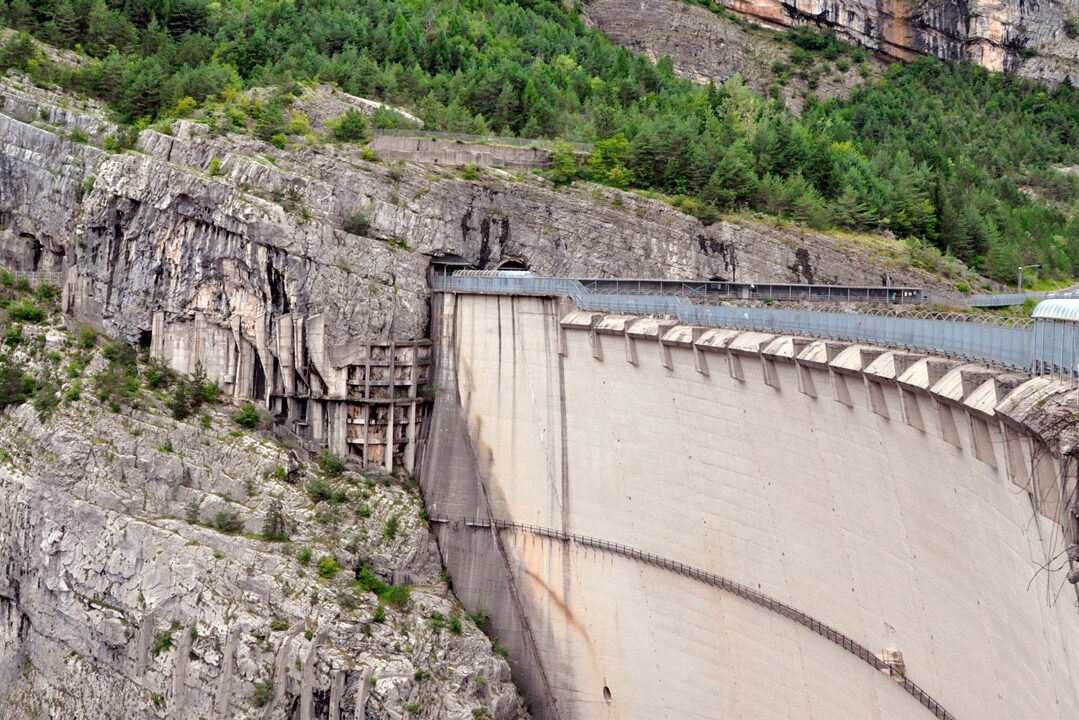
The Vajont dam rises in the gorge dug by the Vajont torrent, a tributary of the Piave river.
It was created as a water “deposit” necessary to regulate outflows, where the waters coming from the artificial lake of Pieve di Cadore were channeled .
The dam is developed on an initial project by the engineer. Carlo Semenza, director of the Hydraulic Construction Service of SADE (Società Adriatica di Elettricità) , founded in 1905 for the “construction and operation of plants for the generation, transmission and distribution of electrical energy in Italy and abroad”.
The first dam project in the Vajont valley dated 22 June 1940 and envisaged a dam approximately 200 meters high for a basin of approximately 50 million cubic meters of water.
This project obtained authorization from the Superior Council of Public Works in October 1943, but was soon replaced by a second, much more daring project: that of the “Grande Vajont”. On 22 April 1957, SADE, the construction company of the work, presented a second executive project for the dam: compared to the previous one, there was “only” a raising of the barrier by approximately 60 metres, but in this way the basin reached a useful capacity of 150 million cubic meters of water.
The waters of the Maè and Boite also flow into the Vajont reservoir, through the Pontesei reservoir. The construction of the dam was contracted to the Torno spa company of Milan, which organized its offices, the village with the canteen and the workers’ accommodation in the Vajont area, on the right bank at an altitude of 770 meters above sea level